April 2026 Newsletter


In this April 2026 edition of The Joshua Tree Project newsletter, you’ll see how connection and shared purpose drive everything we do—rooted in the powerful relationship between the Joshua Tree and the yucca moth.
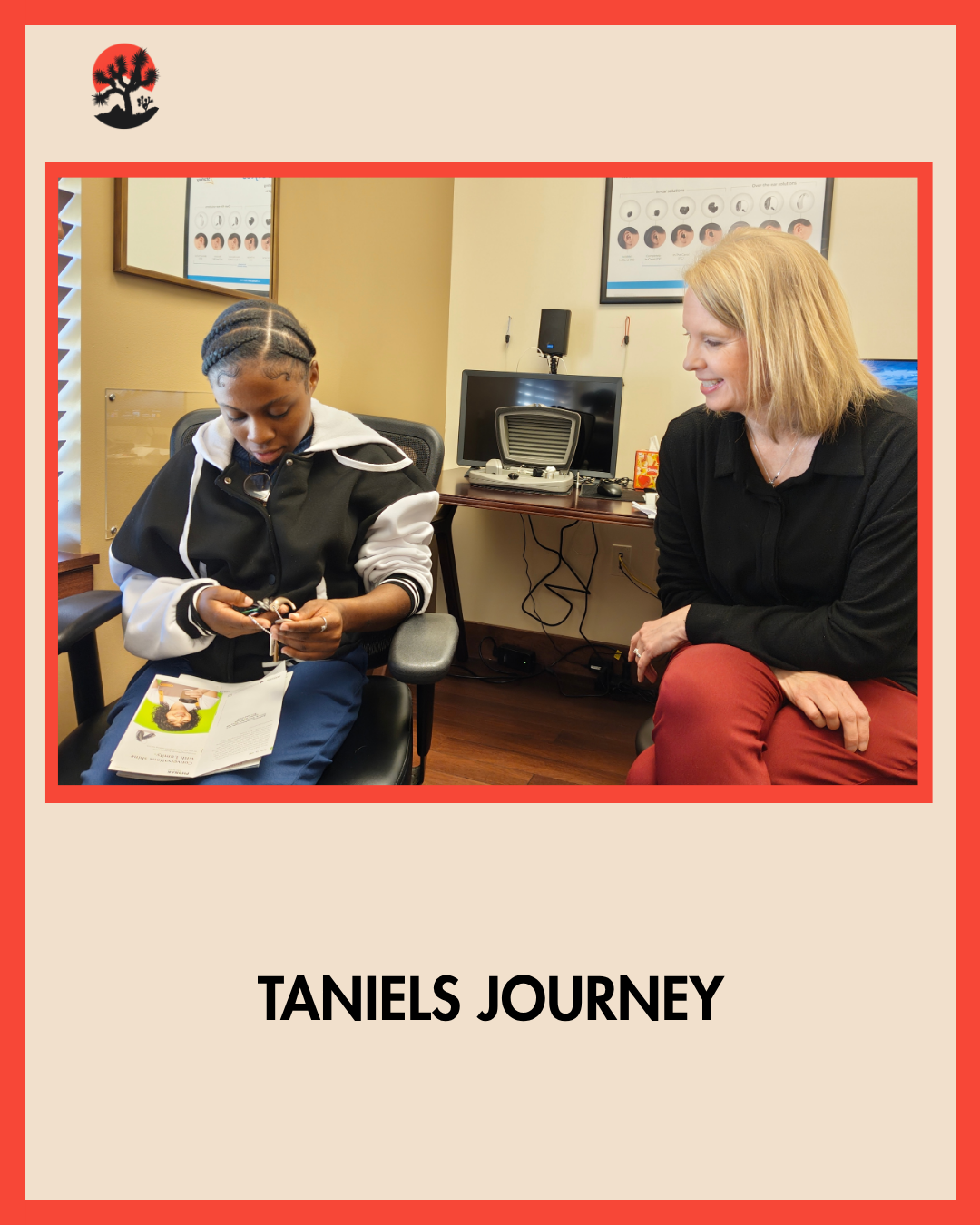
You’ll follow Taniel’s journey from Jamaica to Utah as she receives her first hearing aids, opening the door to new opportunities and deeper connection. You’ll also meet new board member Matt Long and explore how AI wearables and early hearing care are shaping a more accessible future.
Together, these stories show how we are working to expand access and create inclusive experiences for everyone.
NEW BOARD MEMBER
The Joshua Tree Project is proud to welcome Matt Long to our Board of Directors. His experience and passion for expanding access will help guide our efforts as we continue creating opportunities for connection and shared experiences.
TANIEL’S JOURNEY
Taniel recently traveled from Jamaica to Utah for a life-changing milestone—being tested and fitted for her first pair of prescription hearing aids. After living with profound hearing loss her entire life, this journey represents more than just access to technology; it marks the beginning of new opportunities, deeper connections, and a world of sound she is just starting to experience.
HEARING LOSS COULD UP RISK OF DEMENTIA
Experts are warning that untreated hearing loss may significantly increase the risk of dementia, particularly in older adults. Research shows that when hearing declines, the brain receives less stimulation, which can accelerate cognitive decline and contribute to memory issues over time. Hearing loss can also lead to social isolation, another factor linked to increased dementia risk.
Health professionals emphasize that early detection and treatment - such as hearing tests and the use of hearing aids - can help maintain brain health and reduce these risks. They encourage older adults to get their hearing checked regularly and to address any issues promptly as part of a proactive approach to long-term cognitive well-being.
AI-powered wearable devices are rapidly advancing assistive technology by helping people with disabilities navigate daily life with greater independence. These tools use features like real-time object recognition, speech-to-text, and environmental awareness to support users with visual, hearing, and mobility challenges.
The article highlights how these wearables can enhance communication, safety, and accessibility, while also noting ongoing challenges such as cost, privacy concerns, and the need for broader adoption. Overall, AI wearables are positioned as a transformative step toward more inclusive, user-centered technology.